-
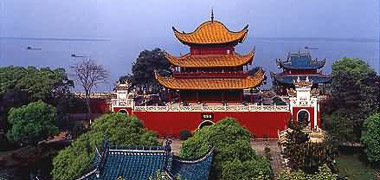
Landscape spots: Baling landscape (including Yueyang Tower, Junshan Island, Memorial Temple of Qu Yuan and Zhang Guying Folk Custom Village) For More Yueyang,formerly knowns as Baling or Yuezhou, is a historic and cultural city with a long history of more than 2,500 years. Located at the northeast of Hunan Province, neighboring Jiangxi Province in the east and Hubei Province in the north, Yueyang was a hinterland of military importance during the past dynasties. Nowadays, renowned for so many historic interests, Yueyang is ranked as one of the China\\\'s Top Tourism Destination Cities.Yueyang\\\'s real charm rests with human cultural relics as well as the natural landscape.Yueyang City\\\'s attractions includies Yueyang Tower, Junshan Isle, Memorial Temple of Qu Yuan and Zhang Guying Folk Custom Village. AttractionsYueyang Tower(Yueyang Lou) Located on the west city wall, the Yueyang Tower is one of three famous towers in South China, the other two being the Yellow Crane Tower in Wuchang and the Prince Teng Pavillion in Nanching. The predecessor of Yueyang Tower was a structure built during the Three Kingdoms period (220 -280 AD) for reviewing military parades. In the fifth year of Emperor Qingli\\\'s reign of the Song Dynasty (716), it was rebuilt, and famous Song Dynasty essay writer Fan Zhongyan(范仲淹) wrote his famous essay \\\"Notes on Yueyang Tower\\\", which was considered matchless in literary beauty and profound thought. Yueyang Tower stands close to Dongting Lake, facing Junshan Isle with the city behind. The main tower, 19 meters high, is a three-story structure supported by four pillars and made of pure wood and upturned eaves. Especially noteworthy is the tower top which resembles a helmet used by warriors in ancient times, a real rarity in the history of ancient Chinese architecture. The structure is a unique combination of artistic tastes, mechanics, architecture, and craftsmanship. The Tower affords a spectacular view of Dongting Lake. Name:Yueyang Yueyang Tower(Yueyang Lou)City:YueyangAddress: on the west city wallAdmission:CNY 46 for adults & CNY 25 for kidsHours:8:00-16:00 Tel:0086-730-8311676 Junshan Isle Junshan Isle is the most famous island in Dongting Lake. It consists of 72 hilllocks, covering an area of 0.96 km2 and rising only 55 meters above sea level. There are many scenic spots and places of historic interest, and many touching fairy tales are told about the island. As the old saying goes, \\\"the water in the Dongting Lake and Junshan in it are viewed as green from the distance. The island resembles a green snail in a silvery plate.\\\" This line was used by ancient people to describe the beautiful scenery of Junshan. The islet, small enough, used to be crowned with as many as 36 pavilions and 48 temples, which were mostly in ruins at the time of liberation. Since the park was established in 1979, many historic sites have been renovated.The Tomb of TWO Concubines is enveloped in a moving story. Legend has it that the two beauties buried here were daughters of Emperor Yao, a mighty trial leader at the end of the primitive society. When Shun succeeded their father, they were married to him as imperial concubines. Unfortunately, Shun died a sudden death when he went the rounds in present-day Ningyuan County of Hunan. The two concubines heard of his death and were heart-broken. At last, they died of grif. To commemorate them, people built the tomb in the east of islet and renovated it dozens of times. Name:Yueyang Junshan Isle (Junshan Dao)City:Junshan county in Yueyang cityAdmission: CNY 60Transport: No.15 sightseeing bus goes from Yueyang Railway Station to the Junshan Scenic Area for 40 minutes & 5 yuanTel: (86)730-8159311Memorial Temple of Qu Yuan Memorial Temple of Qu Yuan is a tourist attraction especially sacred to literary men .It was built on a hill by the Miluo River in memory of Qu Yuan(340BC-278BC), a great patriotic poet and upright stateman of the State of Chu during the Warring States Period(475BC-221BC) .He was exiled late in his life to present-day Miluo. Though in disfavor, he was especially concerned about the fate of his mother-land and had his patriotic feelings crystallized in his collections of poems. At the news of the subjugation of his mother-land by the state of Qin, he was plunged into grief and despair, and, clasping a big stone in his arms, he drowned himself in the Miluo River.The temple is on the Yusishan Mountain in Miluo of Yueyang. Covering an area of 7.8 acres on top of a woody hill by the Miluo River, dates back to 1756. It was surrounded by a grey brick wall and shadowed by old phoenix trees. The front gate is guarded by eight stone divine lions, and the archway is decorated with sixteen painting the life of Qu Yuan here. The main hall is a large structure of wood and brick with a single- eaved roof that covered with yellow glazed tiles. Poetry and proses grieving the death of Qu Yuan are inscribed on the four stone walls. In the front hall is a huge wooden board inscribed with The Biography of Qu Yuan by Sima Qian. Name: Memorial Temple of Qu Yuan(Quzi Ci)City:Miluo in Yueyang cityAdmission: CNY 15Transport: From Yueyang city by train to the Miluo railway station or by coach direct to Miluo city then take a bus to reach Memorial Temple of QuYuan directly. Zhang Guying Folk Custom Village Zhang Guying Folk Custom Village is located in Yueyang. This is a group of building connected by a big family. With the expanding of the family, the whole building was expanded too. The group building is still in good conditions despite being through so many years. Its sewing system is very advanced which gains the interest from many architects. Name:Yueyang Zhang Guying Folk Custom Village (Zhang Guying Cun)City:YueyangAddress: Yueyang county in Yueyang cityAdmission: CNY60Hours: 8:00-18:00Tel:0086-730-8311676Transport:Every day there is a bus to Zhang Guying Village in eastern bus station of Changsha, its departure time is at 1:50 pm, full fare 20 yuan.Transportation from Changsha to YueyangIn Yueyang, tourists need no worries in regard to transportation. Tourists can reach Changsha Huanghua International Airport which is only 130 kilometers (80.78 miles) from Yueyang and takes about one hour\\\'s ride on the high-speed motorway to Yueyang. The high-speed motorway system for road transportation has been long established in Yueyang and radiates in all directions. Transportation by water is also convenient in Yueyang because Yueyang is the only port in Hunan Province which is beside the Yangtze River.
2010-10-05 20:32
View:5515
-
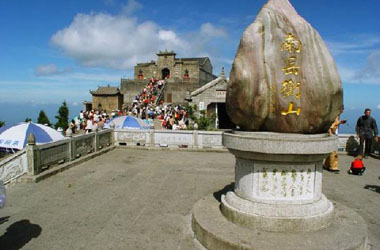
Hengshan MountainMt. Hengshan, also known as Southern Heights Mountain (Nanyue shan), is located about 120km south of Changsha. It is one of the five sacred Buddhist mountains in China, although much of the mountain is also dedicated to Taoist belief. The mountain extends for 80 kilometers and there are a total of 72 peaks in all, the highest of which, the Wishing for Harmony Peak (Zhurong feng), rises to 1,298 meters above sea level. This is a pretty area, that is sometimes a little too popular, although filled with enough charming Buddhist and Taoist temples, some dating back over 1000 years, and pretty scenery to make it worth your while.At the foot of the mountain stands the biggest temple in southern China, the Grand Southern Heights Temple (Nanyue damiao), which covers an area of 100,000 square meters and which is the largest group of ancient buildings in Hunan Province. The original temple is said to have dated back at least as far as the Tang Dynasty (618-907 AD), although it was destroyed by fire at various stages. The present temple dates back to the Qing Dynasty (1644-1911 AD) and is based on Beijing\\\'s Imperial Palace. There are nine courtyards here, with the main hall as a highlight, at 22 meters high and supported by 72 stone pillars in tribute to the mountain\\\'s peaks. The temple, glazed in red and yellow, is linked with many other buildings and is a grand palace complex.The area to arrive in for an ascent of the mountain is not the town of Hengshan, but a village nearby known as Nanyue. After finding accommodation (see below), you can visit the above temple and then set off into the heights (the entrance fee includes a crude, but useful, map), for a days walk that is enlivening and fun. The temples on the mountain are mostly austerely charming and small, meaning that an ascent to the top, including visiting numerous temples, and a return to the village, should not take more than around 10hrs (i.e. a long day). The most interesting of the temples here is at the peak, the Wishing for Harmony Palace (Zhurong gong), that is good for its mystical appearance, often through the mist, and the charm of its solid stone walls and iron roof. Other temples definitely worth a visit include the Wishing for the Emperor Temple (Zhusheng si), just out of the village, that was built for an unconsummated imperial visit by the Qing Emperor Kangxi, the Southern Terrace Temple (Nantai si), that was built during the Yuan Dynasty (1279-1368 AD) and is regarded as the origin of a Buddhist branch in Japan and the Fangguang Temple (Fangguang si), that is quiet and has some breathtaking views. Hengyang Nanyue Great Temple(Nanyue Damiao)Nanyue Great Temple is located at the end of North Street in Nanyue Guzhen under the foot of Nanyue Mountain. It was built at the reign of Emperor Kaiyuan thirteen years in Tang Dynasty. The main hall was rebuilt according to the design and style of Beijing Imperial Palace at the reign of Emperor Guangxu 8 years (1882). It occupies a land area of 98,900 square meters altogether and the height of the palace is 72 feet. It is the biggest and most complete ancient palace like temple in overall layout in our country’s five mountains. Nanyue Great Temple is composed of four groups of courtyards and nine buildings and maintained the Tang and Song’s artistic essence. Nanyue Great Temple is divided into seven entrances. Each entrance possessed its own unique characteristic and purpose where it displayed the architect’s exquisite craft and skill. Lingxin Gate, the entry gate to Nanyue Grant Temple, is 20 meters in height, 20 meters in width and 1.1 meters in thickness. It is the only stone entry gate of such height and width that remains in China. On each side of the gate, there are one side entrances to the Taoism temples and Buddhist temples. In the second courtyard of Nanyue Grant Temple, a stage called Kuixing Pavilion is built to deliver performance to entertain the Gods. The 2 meters high granite stage has been particularly designed and carved to amplify voices of the performers on the stage.Marquis Cai Memorial is originally the residence of Cai Lun, the inventor of paper making skill in Eastern Han Dynasty. People built the memorial in the original place of the residence to memorize Cai Lun. According to Annotation to\\\'Scripture of Hydrology and Geography\\\' by Li Daoyuan, \\\"Lei River passes Caizhou in northwest. The west of Caizhou is the original residence of Cai Lun, near where there is Cai Zi Pool.\\\" On the bank of Caizi Lake in northern Leiyang City, a memorial hall was built in memory of Cai Lun (A.D. 63-121AD), the inventor of paper-making technology. It occupied an area of 408 square meters. It was made with brick and wood structure and faces the north. The memorial hall consists of three wood-brick bungalow. The hall is elegantly designed and constructed. It houses a statue of Cai Lun and a number of historical documents relating to paper-making technology. The hall is of great historical and cultural value. It is not exactly known when Marquis Cai Memorial was begun to be built. In 1338 AD, Chen Zongyi, the governor of Leiyang city, rebuilt the memorial. Being destroyed and rebuilt for several times, the building remaining today was rebuilt in Qing Dynasty. It is simple, unsophisticated and elegant. Facing the south, it takes an area of 408 square meters and is of brick-timberwork. There are three layers and two courtyards. In the antehall, there are three small housese with green tile roof. There are corridors in the two sides. The middle axis is a paved path with cover leading to middle hall. There are also three houses in the middle and back halls, connected with walkway and corridor. Over the main door, there is a stone plaque of \\\"Marquis Cai Memoriall\\\", a stone couplet of \\\"with beautiful pool and shining moon, the style of the original residence remains here\\\". Cai Lun invented paper-making in A.D. 105 years, made the world first plant tissue paper, rewriting the history of bamboo and cloth writing note. It became one of the four greatest inventions in ancient times of China. More than a thousand years later, the skill of paper- making is passed to the Eastern Asia and Europe. FuShou Culture The South Mountain (MountHengshan) is the Shou Mountain in China\\\'s Five Sacred Mountains.Its blessing and Shou culture has a long history and over a long time it is ahalidome for blessing and begging for long life. South Mountainwas called the \\\"Shou Mountain\\\" since the Han dynasty. Since SongHuizong left the carved stone \\\"Shou Mountain?\\\" in the Jinjian peak of South Mountain, the name\\\"ShouMountain?\\\" was popular. For thousands of years, the South Mountain has been respected as the symbol of long life and prosperity.South Mountain has a prosperous shou mountain culture and the atmosphere is dense. Many architectures and relics are named after \\\"shou\\\", such as Wanshou Palace, Shouning Palace, Shoujian Bridge, Shoujian Stream, Baishou Booth, Yanshou Booth, Yanhou Village, Shoufo Hall,etc. The Tripod is located at the top of Jiahe Peak behind the Nanyue Grant Temple. The Tripod is 9.9 meters in height and 56 tons in weight, representing the unity of the 56 nationalities in China and longevity of its people. A total of 10,000 gold characters of \\\"Shou\\\" (Longevity) in different Chinese writing styles are engraved on the frontispiece of the Tripod, with the biggest cursive script \\\"shou\\\" written by Chairman Mao Zedong. According to the Guinness World Records, the tripod is the tallest, heaviest and largest of its kind in the world.
Hot
2021-10-05 20:21
View:11486
-
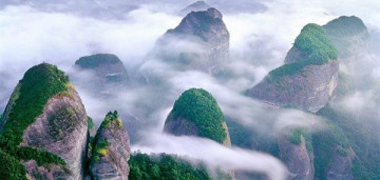
Langshan Mountain is one of China\'s National Geological Park famous for its unique Danxia landform. It is located in Xinning county,about 500 Km2 away from Changsha, capital of Hunan province. In the south Langshan Mountain is connected with Guilin, in the north it echoes Zhangjiajie.Covering an area of 108 square kilometres, Langshan Mountain has rich natural scenery and abundant tourism resources. There are more than 60 scenic spots in Langshan Mountain. Among which the most famous are Tianyi Lane, Chili Peak, Zixia Cave,Fuyi River, Innate Bridge, Bajiao Stronghold,Emperor Xun Forest Park and Xicun Ancient Dwelling. Experts from the International Union for Conservation of Nature (IUCN) will start reviewing danxia landform Sunday in southwest China\\\\\\\'s Guizhou Province which is applying to be included in the World Natural Heritage in 2010.Danxia, which means \\\\\\\"rosy cloud\\\\\\\", is a special landform formed from reddish sandstone that has been eroded over time into a series of mountains surrounded by curvaceous cliffs and many unusual rock formations.Attractions: Bajiao StrongholdThe Bajiao Stonghold is called the soul of Langshan mountain. It is famous for its fantastic and mysterious scenery. The best time to visit Baojiao Stronghold is when there is light mist. The mist braces the peaks below, it seems the whales paddling in the ocean. Also the mist rises slowly from below and kiss you, it seems you are in fairyland and forget you are a human being.The highest peak of Bajiao Stonghold is more than 818 metres high. It erects directly without any peaks around. The strangest is that there is a clean spring on top of this peak! You must wonder at nature\\\\\\\'s masterpieces!Chilli Peak Scenic Spot includes Chilli Peak, Camel Peak, Candle Peak, Yixiantian, Lianjigzai and more. But the most famous are Chilli Peak, Camel Peak and Candle Peak.The Chilli peak is the most marvelous peak in Langshan Mountain. It is 180 metres in height, the top is big and the bottom is small. Its shape is exactly like a mature Chilli soaring amoung hills. In year 2002, the spiderman Alain Robert successfully challenged the Chilli Peak.Camel PeakCamel peak is located in Shitian village. It consits of four stone summits. Each stone represents camel\\\\\\\'s head, body, ridge and tail respectively. Seeing far away, it is like a huge camel galloping in the wild field. On the side of camel peak there stands Candle Peak. It was said the candle lights the way for the camel during the night.Zixia CaveZixia Cave is actually not a really cave, but a canyon sourrounded by high red cliffs. There is one entrance to enter the canyon.It was said that the Zixia Cave is a mysterioius allure.When the sunset shines on the red cliffs, it reflects thousands of rosy cloud. The the whole canyon is full of purple rays and mystery. Hence the name of Zixia Cave(Rosy Cloud Cave).After entering Zixia Cave you can hear brook murmuring, bird singing happily and see splashing waterfalls, green bamboo and blooming wild flowers. It was said that the True Man(Immortal Man) of Zixia cultivated Tao here.The famous scenic spots in Zixia Cave includes Zixia Palace, Stone of Elephant Nose, Zixia Cliff, etc.Fuyi RiverOrigingated from Cat mountain in Guangxi province, the Fuyi River gets through the whole Langshan Scenic Area. It is the mother river of Xinning county. The water of Fuyi River is so clean that you can see fish and sand under it. The two sides are green bamboo and steep crags. The sand in the beach is pure and white. It is excellent river for drifting and rafting. Each summer it draws millions of people to drift along the river.Innate BridgeThe Innate Bridge is called the first bridge in the asia. The bridge is 64 metres long, 14 metres wide and 20 metres high. Its magnificent arc shape like a rainbow over the sky.Tianyi LaneThe original name of Tianyi Lane scenic spot is Ox Nose Castle. Because there is a lot of Ox nose shaped stone holes in the crag, hence the name of Ox Nose Castle. But the innate stone lane is the main feature of this scenic spot. It represents the classic characteristics of Danxia landform. So in year 2004, changed name to Tianyi Lane.Tianyi Lane is marvellous lane in the world. Only the God has power to make such a lane. The lane is 238.8 metres in length, and stone in two sides is more than 120 metres in height. The widest of lane is just 0.8 metres.When you walk along the lane you must shudder because everywhere is dark and the chilliness is coming upon you. But when there is sunshine gleaming on the stone wall, the marvellous and colorful ray panorama can be seen above. You have to marvel at nature\\\\\\\'s masterpiece. City: Shaoyang CityAddress: Xinning County of Shaoyang City, Hunan ProvinceHours:7:00-18:00 Admission: CNY 50 Transportation:There are long-distance buses to Shimen County in Changsha Western Station, which starts at 8:50,9:20, 10:30, 12:50 ,14:20,15:00 15:30,20:00 or 22:20. There are trains going to Shimen county at the Changsha Railway Station.The detailed information is listed in the table below.In Shimen Western Station, the Buses driving to Jiangping(江坪) and Nanping(南坪) can bring you to Huping Mountain.Hotel:Donghan Hotel(东汉大酒店) is opened to foreigners.Detailed information are followed:Best time to go From April to October. An average annual temperature is 62.6F.
Hot
2022-10-08 20:06
View:10664
-
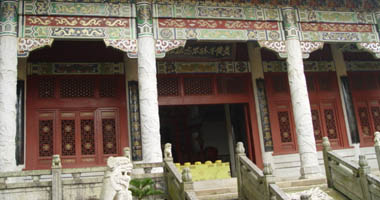
The Chinese people are proud of being descendants of Emperor Yan and Emperor Huang, who respectively ruled the Yangtse River valley and Yellow River about 5,000 years ago. They both made great contributions to their primitive tribes and are looked on as the revered ancestors of the whole nation.According to legend, Emperor Yan \"Invented\"spade-shaped plough, taught his subjects how to do farm work, tasted various herbs, made medicines, wove hempen cloth and set up markets.\"Late in his life, he continued to serve his people by treating their diseases and, unfortunately, died of tasting poisonous herbs in Ling County. Admiring his merits and virtues, his posterity built the Ancestral Temple to Emperor Yan at his burial mound in 967. Since then, in important ceremonials, sovereigns of every later dynasty would always tell envoys to visit the temple and offer sacrifices. Ruined several times in wars, it was rebuilt in the Qing dynasty(1616-1911). Yet, in 1954, it was burnt down. In October, 1985, the provincial government approriated a large sum of money and ordered the construction of the Mausoleum of Emperor Yan at the former site in Ling County. Now it has been a sacred place where the Chinese people pay homage to their ancestor.The front gate is called the Meridian Gate since our ancestor enjoys supremacy even unchallenged by sovereigns. It is flanked by partitioned rooms that house dozens of steles inscribed with funeral orations of varous dynastied . Beyond the gate, the vermillion steps lead to the Salute Pavillion, where worshipers are supposed to stop and give a salute before entering the main hall. Behind the pavillion unfolds three marble ramps carved in relief with patterns of invertwining clouds and dragons. They are fixed between six flights of marble steps that climb up the three-tiered terrace. High on the terrace stands the main hall, a finely decorated building with a hipped and gabled roof of double eaves. It houses a golden statue of Emperor Yan siting behind a basketful of crops, with a bunch of rice ears in the left hand and a medicinal herg in the right hand. Behind the hall is a pavillion, in which the grave stone is erected; and further on, the resting place of our revered ancestor lies in the rear of the courtyard. These major buildings, distributed one after another along the central axis, are symmet-rically flanked by minor buildings, such as the Sage-Worshiping Temple the Loft Virtues Archway, the Animal- Sacrificing Pavilion and the Harvest-Singing Terrace.Surrounded by towering old trees, the mausoleum seems all the more stately and splendid, with the golden roof s flashing brilliantly in the sun and the purple walls occasionally from behind the lush trees. The Emperor Yan\'s Mausoleum CeremonyChinese people are proud of being descendants of Emperor Yan and Emperor Huang, who, respectively, ruled the Yangtse and Yellow River vallies, about 5,000 years ago. As the legend goes, Emperor Yan went south to find herbs to treat his people. Unfortunately he ate some poisonous herbs, and died. In 967, in admiration of his merits and virtues, the Ancestral Temple was built, for him, at his mausoleum, which is at the foot of a mountain in Zhuzhou City, Hunan Province.According to historical records, people have performed sacrificial rituals in honor of Yan, since the Han Dynasty (206BC-AD220). There are a variety of activities in the ceremony, including offering objects or animals, playing music, and dragon dance performances, among others.The memorial ceremony has two types; the official and the folk, both of which have been preserved from ancient times. According to historical records, the grand ceremony was held 15 times during the Ming Dynasty (1368-1644), and 38 times during the Qing Dynasty (1644-1911).During its long history, the ceremony performed at Yan\'s mausoleum has become a culture with its own music, dance and literature. To commemorate Yan\'s discovery and use of fire, nine dragons are set alight, on stage. These then ignite the top firestone with the flames spouting from their mouths. The performance symbolizes that the Chinese people are descendants of dragons. In the square of the divine dragon hall, yellow, cyan,black, white, and red dragons perform according to the five different orientations, an embodiment China\'s rich traditional culture. Since China\'s reform and opening up in 1979, emperor Yan\'s mausoleum has become a prominent cultural artifact, and taking part in the rituals has become an important way of expressing patriotic sentiment, for many Chinese. In recent years, more than 100,000 overseas Chinese have come back to take part in the annual event. Attractions:Although we can\'t work out when Emperor Yan Mound was first built, according the records of history books, it must have been built before the Five Dynasty. In 967 A.D., Emperor Taizong of Song Dynasty assigned people to build a temple in front of Emperor Yan\'s Mound and Emperor Kangxi and Emperor Daoguang of Qing Dynasty also assigned officials to stand gravestones here. Emperor Yan is o?ne of the ancestors of Chinese people, he and Emperor Huang are called Yanhuang.Emperor Yan\'s Mound tourist zone includes human sight as Emperor Yan\'s Mound, Emperor Yan Temple, Fengshen Temple, Congde Lane, Huzhenguan Temple, Luyuan Kiosk and Holy Fire Dais, and natural sight such as Luyuan Cave, Dragon Head Stone, Dragon Claw Stone and Flower Washing Pool, all of them are very attractive.Emperor Yan\'s Mausoleum Scenic AreaSituated on Luyuan Slope west of Yanling County, it is a national AAAA scenic area. Among the tourist attractions in the scenic area, the most important one is Emperor Yan\'s Mausoleum which is a State Preservation Unit of Key Historical Relics and a national AAAA tourist zone. The mausoleum was built in 967 AD during the North Song Dynasty to commemorate Emperor Yan, one of the earliest ancestors of the Chinese people. In 2005 it was listed in the Top Ten Cultural Relics of Hunan Province. Other attractions include Emperor Yan Temple,Chongde Memorial Archway, Luyuan Pavilion, Saint Fire Terrace and Luyuan Cave. Over the past hundreds of years, sacrificial ceremonies have been held in front of Emperor Yan\'s Mausoleum. Now it is a sacred place for all the descendants of Emperor Yan and Huang in the world to seek their roots and pay homage to their earliest ancestors.Emperor Yan’s Mound is 6 m high and the diameter of its bottom is 27 m long. In front of the mound stands a gravestone set up by Emperor Daoguang in Qing Dynasty, writing the epigraph “Emperor Yan Shennongshi’s Mound”. In 1986, when the repair construction was finished, president Hu Yaobang also wrote a epigraph “Emperor Yan Shennongshi’s Mound”, which was carved into the white marble gravestone standing in the center of gravestone kiosk in front of the mound. All the Mound zone is surrounded by high mountains and Mishui River flows under the mountains, so the environment here is very quiet and peaceful.Travel tips:Zhuzhou enjoys humid monsoon climate in subtropical zone. The four seasons are distinct; the rain and heat is abundant with 286 days of frost-free period. The annual average temperature falls between 16℃ and 18℃. The four seasons are suitable for traveling, especially spring and autumn.If you go to Emperor Yan\'s Mound Tourist Zone to sacrifice Chinese people\'s ancestor, Shenlongshi, think of his great deed in tasting various herbs and recall his benefaction, you will have a feeling of thankfulness and bring a pure deep love to our people and nation.TrafficThe mausoleum of Emperor Yandi is in Luyuan Slope, 19 kilometers west of Yanling County, Hunan Province.You can take a bus to Zhuzhou city from Changsha.Then Take scheduled bus in Zhuzhou City to Yanling County. Then take a bus to Emperor Yan\'s Mausoleum and get off at Yandi Emperor Mausoleum arch, take the local bus, the fare is $3 or 4, the fare of taxi is $20-30.Admission (for reference): RMB 45yuan /adultTel: (86)731-26100857Yandi Mausoleum fee and opening hourTicket : 15 yuanOpening hours: 08:00-17:30Tips1.If you go to Emperor Yan\'s Mound Tourist Zone to sacrifice Chinese people\'s ancestor, please keep silent and dignified.2.please respect Chinese cultural monument, do not scrawl randomly and touch them with your hands.
2010-10-05 19:40
View:7651
-
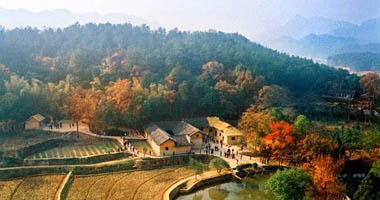
The Former Residence of Chairman Mao is located at Shangwu Ground, Tudi Chong, Shaoshan village, Shaoshan Township. It lies on the south and faces on the north, the building structure is like Chinese character \"凹\". On the east, it belongs to Mao\'s family, on the other side of the house is the neighbor\'s, they shared the central room. On Dec.26, 1893, Mao Zedong was born in the house. We can see Mao\'s family photo, everyday household utensils, all kinds of farm tools, and shoulder pole, bucket, hoe that used by Mao Zedong when he was young. As the hometown of the great man of the generation, now Shaoshan is one of the important tourist zones in Hunan province. The major tourist sites including the Former residence of Chairman Mao, Memorial Hall of Mao Zedong, Water-dripping Cave and Steles Forest of Mao\'s Poems, and so on.Attractions:The former residence of Chairman Mao Shaoshan is a small mountain village about 100km southwest of Changsha, the capital of Hunan province, with some fairly beautiful scenery and a once typically Hunan village atmosphere, Shaoshan has been irreparably changed by history. On the 26th December 1893, a baby was born in a little house in this village, to a relatively wealthy peasant couple. The child was to grow up to become China\'s Great Helmsman, Chairman Mao Zedong, and it was in this region that he spent his childhood and youth, attending school and helping his father with his work.The former residence of Chairman Mao is the most interesting site. Entered through a courtyard, the house is of a sunny yellow, mud brick walls, with a nicely thatched roof, and is found on a wooded hillside, above some lush paddy fields. There are 13 and one half rooms in the Former residence, which include one and half central room, a kitchen, a dining room, three family bedrooms and a guest room. Within the rooms are various personal effects of Mao and his parents, as well as photos from Mao\'s life.This is the central room, used by two families: Mao's family and their neighbor. So we said that there is only one half of the central room belongs to Mao's family. And this is there kitchen, where Chairman Mao often helped his mother doing some housework in his childhood. Go through the kitchen was Chairman Mao's parent's bedroom, there are two photos of Chairman Mao's parents on the inner wall, and it was in this room where Chairman Mao was born. Chairman Mao Memorial HallThe Chairman Mao Memorial Hall commonly known as the Mausoleum of Mao Zedong, or the Mao Mausoleum, is the final resting place of Mao Zedong Chairman of the Politburo of the Communist Party of China from 1943 and the chairman of the Central Committee of the Communist Party of China from 1945 until his death.Although Mao had wished to be cremated, his body was embalmed, and construction of a mausoleum began shortly after his death. This highly popular attraction is located in the middle of Tiananmen Square, in Beijing, the capital of China. On this site had previously stood the Gate of China, the southern (main) gate of the Imperial City during the Ming and Qing dynasties.The remains of the Great Helmsman, as he is sometimes known, are on display for public viewing. People line up for hundreds of feet (dozens of meters) every day to see the former chairman, many paying tribute to him with flowers which can be rented at the entrance on the north side. There is a souvenir shop at the exit on the south side. Comrade Mao Zedong Bronze Statue SquareComrade Mao Zedong Bronze Statue Square was built at Chairman Mao\'s 100th birth anniversary in 1993. It is located in the center of the core scenic area of Shaoshan. It is the main site for domestic and overseas tourists to commemorate Comrade Mao Zedong, the venue for a variety of large-scale events, and the distribution center for visitors who tour Shaoshan. Comrade Mao Zedong Bronze Statue Square was reconstructed and extended at Chairman Mao\'s 115th birth anniversary in 2008. It is \"Number One Project\" in the Shaoshan major construction projects. Approved by the Central, \"Small Displacement, Small Shift\" program was used to renovate and expand Comrade Mao Zedong Bronze Statue Square based on the original one. After the reconstruction, the total area of the square is 100,000 square meters now and the height of Comrade Mao Zedong bronze statue is 10.1 meters tall including the foundation. Backed by Shaofeng and facing the former residence, People in this magnificent and solemn atmosphere can have a better understanding of the extraordinary spirit of the great man Mao.The Dripping Water CaveThe Dripping Water Cave, about 3 km northwest of the village, is a very popular destination, possibly because of the fact that Mao allegedly spent 11 days here in the early days of the Cultural Revolution Years (1966-76), contemplating the unknown.Shaoshan Steles Forest of Mao’s PoemsMao Zedong\'s Poetry Forest of Stone Tablets is located half way up the mountain of Shaofeng and about 3 kilometers away from Mao Zedong\'s Former Residence. It was formally opened in 1993, with a total area of nearly 20,000 square meters. The whole garden is divided into five parts according to Mao\'s revolutionary career and four periods by the chronological order.The first part: Mao Zedong\'s poetry written in his youth.The second part: Mao Zedong\'s poetry written during the time of Great Revolution and the second Revolutionary War. The third part: Mao Zedong\'s poetry written in the time of Long March of the Red Army, Anti-Japanese War, and the War of Liberation.The fourth part: Mao Zedong\'s poetry written after the establishment of new China.On hillside stood steles engraved with Mao’s fifty poems. Among them 28 is Mao’s original handwriting. Due to the poetic sentiment and picturesque layout, it is appraised as one of Hunan’s best scenic spots. The Peak of Mount Shaoshan Mount Shaoshan has an abundance of green and old trees. There are eight scenic spots and five marvelous spectacles. Tourists can climb to Shaoshan old temple on mountaintop while enjoying birds singing and pine trees whistling and the beautiful sceneries. Cableway is also available.Travel tips:This site is on the outskirts of Shaoshan (approximately 104 km outside of Changsha) and is easily reached by bus.Huaminglou, Liu Shaoqi\'s former residenceHuaminglou is in a beautiful small town of South Changjiang. It is located o?n the bank of Jinjiang River, northeast border of Wangcheng County, in the southeast of Ningxiang County boundary, Hunan Province. Its neighboring is Xiangtan and Xiangxiang city in southwest and is 30 kilometers east from provincial capital Changsha. The distance from Mao Zedong\'s hometown, Shaoshan, is 37 kilometers o?n the south and is 30 kilometers west from the county. Huaminglou scenic area occupies more than 670,000 square meters with the total floor space of 35,000 square meters. The main scenic spots are Liu Shaoqi\'s Former Residence, Memorial Hall, Bronze Statue Square, Exhibition Hall, Huaming Tower, Accomplishment Pavilion, Airplane Liu Shaoqi Had Taken, Ancestral Graves of Liu Shaoqi, Wang Guangmei\'s Tomb, Landscape Diagram of the Universe, etc. It has gained the honor of \"the first batch national patriotic education bases,\" \" the first batch national AAAA level traveling scenic spots,\" \"one of Ten Chinese classics red scenic spots,\" so it is a revolutionary commemorating and traveling spot with national influence.What to visitHuaminglou is famous for it\'s the hometown of Liu Shaoqi - one of the great leaders in Chinese revolution, His former residence is surrounded by lots of trees, and there are more than 30 wood rooms in the courtyard. Apart from the living room, there is also reading room for children to study.Memorial Museum 500 meters from Liu Shaoqi\'s former residence, there is a Memorial Museum in honor of him, in the museum there are more than 800 cultural relics and materials, including some of Liu Shaoqi\'s books and daily things.Liu Shaoqi\'s Bronze Statue SquareLiu Shaoqi\'s Bronze Statue Square covers more than 8,000 square meters. The bronze statue was donated by the Chinese National General Labor Union, and sculptured carefully by famous sculptor Liu Kaiqu and Cheng Yunxian. The statue is 7.1 meters high (including the base) which implies two meanings. July 1st is the birthday of Communist Party of China, symbolizing Liu Shaoqi\'s outstanding contribution to Communist Party.Meanwhile, Liu Shaoqi died at the age of 71, implicating his glorious and great life. The bronze statue was completed on November 24th, 1988. President Yang Shangkun unveiled it personally. In 1998, General Secretary of CPC and President Jiang Zeming inscribed for the bronze statue. Huaming ParkHuaming Park occupies more than 130000 square meters. It\'s a park carries Chinese traditional virtues as the culture theme with the sites of Huaming Tower, Accomplishment Pavilion, Airplane Liu Shaoqi Had taken, Wande Tripod Cauldron, A-leaf Lake, etc. It opened in 2003. Huaming TowerHuaming Tower is a five storey tower with the height of one hundred feet. It is ancient dignified, grand and magnificent with jujube color corridors, carved pillars and drawings. The tower is decorated by the background of plum, orchid, bamboo, chrysanthemum and lotus, which implies the lofty thought of Liu Shaoqi for persisting in the truth and never changing his aspiration.Airplane Liu Shaoqi Had TakenDoyle -18-240 airplane is a turbine spiral medium range airliner imported from former Soviet Union in 1959. The fuselage is 36.9 meters. It has wingspan of 37.4 meters and weights 32 tons, which was the specified airplane for leaders of Communist Party and country. Liu Shaoqi, Zhou Enlai, Peng Zhen, Chen Yi all had taken this plane. It has accompanied Liu Shaoqi to participate in many important activities about foreign affairs. In 1963, Liu Shaoqi visited Indonesia, Burma, Cambodia and Vietnam by this plane. Moreover, Liu Shaoqi accompanied Jin Richeng to meet Mao Zedong from Beijing to Wuhan by the plane on the eve of discussion war between China and Soviet Union.In December 2000, the National Bureau of Cultural Heritage organized some experts on revolutionary cultural heritage to appraise it. A document named was written to collect the plane Liu Shaoqi had taken. This specified plane is the true one after appraised by captain and mechanic who drove it before, so it has high historical value. The museum is authorized to preserve it as a precious cultural heritage. On September 2nd, 2003, the airplane successfully settled in Huaming Tower. On November 24th in the same year, it was opened to public formally. The plane is preserved completely. The cabin was separated into the first-class cabin, ordinary cabin, resting cabin, goods preservation cabin and toilets except for cockpit, the seats and military beds in cabins are the originals.Airplane Liu Shaoqi Had TakenThe name of Accomplishment Pavilion comes from Liu Shaoqi\'s work Accomplishment of Members of Communist Party. Accomplishment Pavilion is composed of main pavilion, two courtyards and a small assembling square. There are original handwriting of outline on Accomplishment of Members of Communist Party, discussion accomplishment by celebrities in previous dynasties, the appraisal of three generations of leaders on Accomplishment of Members of Communist Party, and contemporary calligraphy and painting work of celebrities.Travel Tips:When to goChangsha falls within the subtropical monsoon climate with distinct seasons and changing temperature. The annual temperature is 17.2℃. The weather of spring in Changsha is changeable; you need to wear thick clothes. The autumn begins from the middle of August. The weather is fine and the sky is clear. To sum up, September and October in autumn is the best time for traveling.Traffic There are coaches from Changsha to Ningxiang, and there are buses to huaminglou from Changsha, Ningxiang, Shaoshan. You can go there by bus.It is about 50 kilometers apart from Changsha and the bus fare is around 20RMB. The Huaminglou town is the hometown of Liu Shaoqi, one of the main and respected leaders in China. All of the Huaminglou scenic area takes up 470,000 square meters and the admission fee is 30RMB.the Former Residence of Chairman Mao is on the outskirts of Shaoshan (approximately 104 km outside of Changsha) and is easily reached by bus.You can first vist Liu Shaoqi\'s former residence and then take the bus from there to the Former Residence of Chairman Mao. It will take you 20 yuan and 30 mininutes.
2010-10-06 19:14
View:10101
-
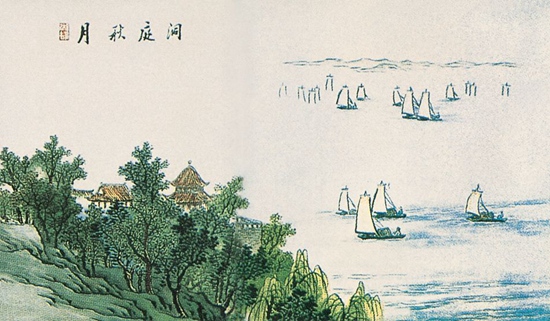
The Eight Old Views of Xiaoxiang , or the legendary eight scenic spots in the basin area of the Xiangjiang River, represent the charming sceneries of Hunan. Shen Kuo, a famous man of letter from the Song Dynasty once depicted the eight views in his literature work Sketches and Notes Written in Mengxi Park. Wits in various times also followed his suits. However, the Eight Old Views are not easy to be found nowadays due to the old age and changes of the society. On April 2005, the Hunan Provincial Tourism Association launched an activity to single out the Eight New Views of Xiaoxiang in order to seek after the lost splendor of the Eight Old Views. It has taken one year to finish the selection work of the Eight New Views of Xiaoxiang, which covers three categories, including landscape culture, sceneries of humanities and ecological leisure. The New Eight Views of Xiaoxiang, the epitome of the best features of Hunan scenic spots, have succeeded in passing on history and civilization, and giving a new light to the Eight Old Views in the new era.
2016-10-12 19:09
View:3647
-
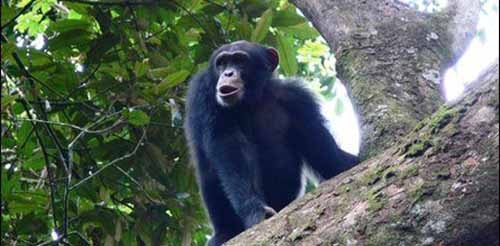
Four Guinean chimps arrived at Changsha Ecological Zoo amidst wind and snow on the evening of Jan.17. They will meet visitors during the coming Spring Festival.The four two-year-old chimps with two males and two females left their hometown on Jan.15 and reached Beijing Capital International Airport on the evening of Jan.16. And they started their journey to Changsha in a truck the very night after the arrival. Changsha Ecological Zoo prepared a large comfortable house which covers an area of 1,800 ㎡. The house is equipped with the debugged heating system to keep the room between 18-25 C. In addition, outdoor entertainment equipment are also provided, such as swings and resting shelves. Raisers in the Zoo have worked out a special recipe which includes milk, honey, watermelons, peaches, apples, little tomatoes, bread and other expensive food for the newcomers. SOURCE:Hunan Offcial Web PortalTranslator: Guo Yan
2011-01-20 19:02
View:2500
-
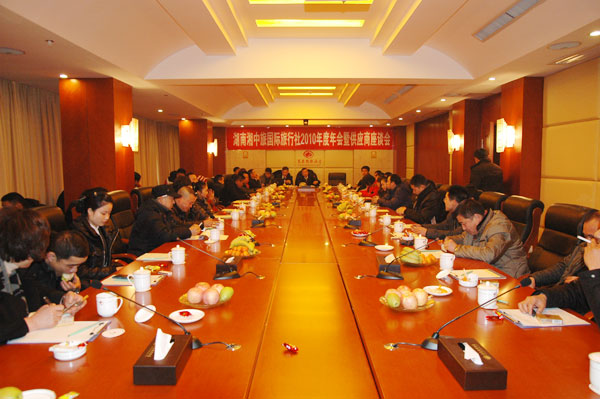
January 19, 2011 Spring Meeting held in Zhangjiajie Wantai Hotel.LIU Kui, Chairman made a summary report and work plan for 2011.Prizes awarded to outstanding workers.Poor children were invited to Meeting, and they sent a New Year's blessing, to express a deep sense of love.
2011-01-20 15:22
View:4687
-
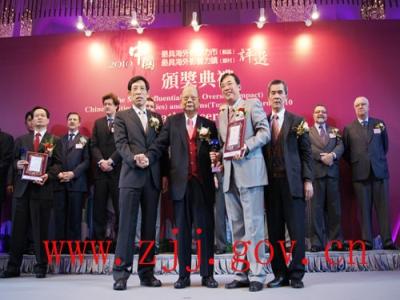
Zhangjiajie is named the "2010 China's most influential cities in the overseas"The Most Influential (with Overseas Impact )Chinese Cities(Counties)and Towns(Townlets) Awards 2010,January 19, 2011 event held in Hong Kong,Many Countries Consulate General in Hong Kong and social celebrities give strong support to this event.Zhangjiajie City, together with the other 60 were selected as "2010 China's most influential cities overseas".Zhangjiajie city leaders attended the ceremony;Zhangjiajie City Mayor Zhao Xiaoming At the event, made impassioned speeches:Zhangjiajie will step into the world.
2011-01-20 14:59
View:3013
-
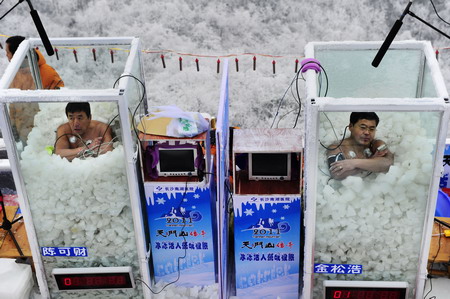
The Chinese "Icemen" Chen Kecai (left) and Jin Songhao (right) stand in a plastic box during a cold endurance competition in Zhangjiajie on Jan. 3, 2011. Jin Songhao and the other challenger Chen Kecai, both from Northeast China's Helongjiang province, took part in an ice endurance contest held on Tianmen Mountain on Monday, in which the two stayed in ice wearing nothing but a swimsuit. Jin Songhao dwarfed Wim Hof's world record for the longest ice bath by immersing himself in ice for 120 minutes while Chen last for 118 minutes. The previous world record was 115 minutes, which was made by Dutch "Iceman" Win Hof on Dec 30, 2010.
2011-01-03 13:47
View:3769