-
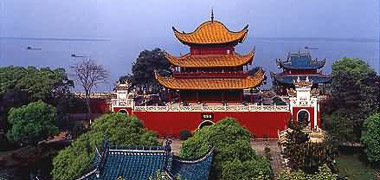
Landscape spots: Baling landscape (including Yueyang Tower, Junshan Island, Memorial Temple of Qu Yuan and Zhang Guying Folk Custom Village) For More Yueyang,formerly knowns as Baling or Yuezhou, is a historic and cultural city with a long history of more than 2,500 years. Located at the northeast of Hunan Province, neighboring Jiangxi Province in the east and Hubei Province in the north, Yueyang was a hinterland of military importance during the past dynasties. Nowadays, renowned for so many historic interests, Yueyang is ranked as one of the China\\\'s Top Tourism Destination Cities.Yueyang\\\'s real charm rests with human cultural relics as well as the natural landscape.Yueyang City\\\'s attractions includies Yueyang Tower, Junshan Isle, Memorial Temple of Qu Yuan and Zhang Guying Folk Custom Village. AttractionsYueyang Tower(Yueyang Lou) Located on the west city wall, the Yueyang Tower is one of three famous towers in South China, the other two being the Yellow Crane Tower in Wuchang and the Prince Teng Pavillion in Nanching. The predecessor of Yueyang Tower was a structure built during the Three Kingdoms period (220 -280 AD) for reviewing military parades. In the fifth year of Emperor Qingli\\\'s reign of the Song Dynasty (716), it was rebuilt, and famous Song Dynasty essay writer Fan Zhongyan(范仲淹) wrote his famous essay \\\"Notes on Yueyang Tower\\\", which was considered matchless in literary beauty and profound thought. Yueyang Tower stands close to Dongting Lake, facing Junshan Isle with the city behind. The main tower, 19 meters high, is a three-story structure supported by four pillars and made of pure wood and upturned eaves. Especially noteworthy is the tower top which resembles a helmet used by warriors in ancient times, a real rarity in the history of ancient Chinese architecture. The structure is a unique combination of artistic tastes, mechanics, architecture, and craftsmanship. The Tower affords a spectacular view of Dongting Lake. Name:Yueyang Yueyang Tower(Yueyang Lou)City:YueyangAddress: on the west city wallAdmission:CNY 46 for adults & CNY 25 for kidsHours:8:00-16:00 Tel:0086-730-8311676 Junshan Isle Junshan Isle is the most famous island in Dongting Lake. It consists of 72 hilllocks, covering an area of 0.96 km2 and rising only 55 meters above sea level. There are many scenic spots and places of historic interest, and many touching fairy tales are told about the island. As the old saying goes, \\\"the water in the Dongting Lake and Junshan in it are viewed as green from the distance. The island resembles a green snail in a silvery plate.\\\" This line was used by ancient people to describe the beautiful scenery of Junshan. The islet, small enough, used to be crowned with as many as 36 pavilions and 48 temples, which were mostly in ruins at the time of liberation. Since the park was established in 1979, many historic sites have been renovated.The Tomb of TWO Concubines is enveloped in a moving story. Legend has it that the two beauties buried here were daughters of Emperor Yao, a mighty trial leader at the end of the primitive society. When Shun succeeded their father, they were married to him as imperial concubines. Unfortunately, Shun died a sudden death when he went the rounds in present-day Ningyuan County of Hunan. The two concubines heard of his death and were heart-broken. At last, they died of grif. To commemorate them, people built the tomb in the east of islet and renovated it dozens of times. Name:Yueyang Junshan Isle (Junshan Dao)City:Junshan county in Yueyang cityAdmission: CNY 60Transport: No.15 sightseeing bus goes from Yueyang Railway Station to the Junshan Scenic Area for 40 minutes & 5 yuanTel: (86)730-8159311Memorial Temple of Qu Yuan Memorial Temple of Qu Yuan is a tourist attraction especially sacred to literary men .It was built on a hill by the Miluo River in memory of Qu Yuan(340BC-278BC), a great patriotic poet and upright stateman of the State of Chu during the Warring States Period(475BC-221BC) .He was exiled late in his life to present-day Miluo. Though in disfavor, he was especially concerned about the fate of his mother-land and had his patriotic feelings crystallized in his collections of poems. At the news of the subjugation of his mother-land by the state of Qin, he was plunged into grief and despair, and, clasping a big stone in his arms, he drowned himself in the Miluo River.The temple is on the Yusishan Mountain in Miluo of Yueyang. Covering an area of 7.8 acres on top of a woody hill by the Miluo River, dates back to 1756. It was surrounded by a grey brick wall and shadowed by old phoenix trees. The front gate is guarded by eight stone divine lions, and the archway is decorated with sixteen painting the life of Qu Yuan here. The main hall is a large structure of wood and brick with a single- eaved roof that covered with yellow glazed tiles. Poetry and proses grieving the death of Qu Yuan are inscribed on the four stone walls. In the front hall is a huge wooden board inscribed with The Biography of Qu Yuan by Sima Qian. Name: Memorial Temple of Qu Yuan(Quzi Ci)City:Miluo in Yueyang cityAdmission: CNY 15Transport: From Yueyang city by train to the Miluo railway station or by coach direct to Miluo city then take a bus to reach Memorial Temple of QuYuan directly. Zhang Guying Folk Custom Village Zhang Guying Folk Custom Village is located in Yueyang. This is a group of building connected by a big family. With the expanding of the family, the whole building was expanded too. The group building is still in good conditions despite being through so many years. Its sewing system is very advanced which gains the interest from many architects. Name:Yueyang Zhang Guying Folk Custom Village (Zhang Guying Cun)City:YueyangAddress: Yueyang county in Yueyang cityAdmission: CNY60Hours: 8:00-18:00Tel:0086-730-8311676Transport:Every day there is a bus to Zhang Guying Village in eastern bus station of Changsha, its departure time is at 1:50 pm, full fare 20 yuan.Transportation from Changsha to YueyangIn Yueyang, tourists need no worries in regard to transportation. Tourists can reach Changsha Huanghua International Airport which is only 130 kilometers (80.78 miles) from Yueyang and takes about one hour\\\'s ride on the high-speed motorway to Yueyang. The high-speed motorway system for road transportation has been long established in Yueyang and radiates in all directions. Transportation by water is also convenient in Yueyang because Yueyang is the only port in Hunan Province which is beside the Yangtze River.
Changde & Yueyang & Hengyang
2010-10-05 20:32
View:5790
-
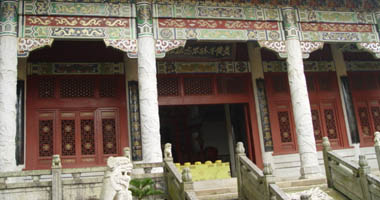
The Chinese people are proud of being descendants of Emperor Yan and Emperor Huang, who respectively ruled the Yangtse River valley and Yellow River about 5,000 years ago. They both made great contributions to their primitive tribes and are looked on as the revered ancestors of the whole nation.According to legend, Emperor Yan \"Invented\"spade-shaped plough, taught his subjects how to do farm work, tasted various herbs, made medicines, wove hempen cloth and set up markets.\"Late in his life, he continued to serve his people by treating their diseases and, unfortunately, died of tasting poisonous herbs in Ling County. Admiring his merits and virtues, his posterity built the Ancestral Temple to Emperor Yan at his burial mound in 967. Since then, in important ceremonials, sovereigns of every later dynasty would always tell envoys to visit the temple and offer sacrifices. Ruined several times in wars, it was rebuilt in the Qing dynasty(1616-1911). Yet, in 1954, it was burnt down. In October, 1985, the provincial government approriated a large sum of money and ordered the construction of the Mausoleum of Emperor Yan at the former site in Ling County. Now it has been a sacred place where the Chinese people pay homage to their ancestor.The front gate is called the Meridian Gate since our ancestor enjoys supremacy even unchallenged by sovereigns. It is flanked by partitioned rooms that house dozens of steles inscribed with funeral orations of varous dynastied . Beyond the gate, the vermillion steps lead to the Salute Pavillion, where worshipers are supposed to stop and give a salute before entering the main hall. Behind the pavillion unfolds three marble ramps carved in relief with patterns of invertwining clouds and dragons. They are fixed between six flights of marble steps that climb up the three-tiered terrace. High on the terrace stands the main hall, a finely decorated building with a hipped and gabled roof of double eaves. It houses a golden statue of Emperor Yan siting behind a basketful of crops, with a bunch of rice ears in the left hand and a medicinal herg in the right hand. Behind the hall is a pavillion, in which the grave stone is erected; and further on, the resting place of our revered ancestor lies in the rear of the courtyard. These major buildings, distributed one after another along the central axis, are symmet-rically flanked by minor buildings, such as the Sage-Worshiping Temple the Loft Virtues Archway, the Animal- Sacrificing Pavilion and the Harvest-Singing Terrace.Surrounded by towering old trees, the mausoleum seems all the more stately and splendid, with the golden roof s flashing brilliantly in the sun and the purple walls occasionally from behind the lush trees. The Emperor Yan\'s Mausoleum CeremonyChinese people are proud of being descendants of Emperor Yan and Emperor Huang, who, respectively, ruled the Yangtse and Yellow River vallies, about 5,000 years ago. As the legend goes, Emperor Yan went south to find herbs to treat his people. Unfortunately he ate some poisonous herbs, and died. In 967, in admiration of his merits and virtues, the Ancestral Temple was built, for him, at his mausoleum, which is at the foot of a mountain in Zhuzhou City, Hunan Province.According to historical records, people have performed sacrificial rituals in honor of Yan, since the Han Dynasty (206BC-AD220). There are a variety of activities in the ceremony, including offering objects or animals, playing music, and dragon dance performances, among others.The memorial ceremony has two types; the official and the folk, both of which have been preserved from ancient times. According to historical records, the grand ceremony was held 15 times during the Ming Dynasty (1368-1644), and 38 times during the Qing Dynasty (1644-1911).During its long history, the ceremony performed at Yan\'s mausoleum has become a culture with its own music, dance and literature. To commemorate Yan\'s discovery and use of fire, nine dragons are set alight, on stage. These then ignite the top firestone with the flames spouting from their mouths. The performance symbolizes that the Chinese people are descendants of dragons. In the square of the divine dragon hall, yellow, cyan,black, white, and red dragons perform according to the five different orientations, an embodiment China\'s rich traditional culture. Since China\'s reform and opening up in 1979, emperor Yan\'s mausoleum has become a prominent cultural artifact, and taking part in the rituals has become an important way of expressing patriotic sentiment, for many Chinese. In recent years, more than 100,000 overseas Chinese have come back to take part in the annual event. Attractions:Although we can\'t work out when Emperor Yan Mound was first built, according the records of history books, it must have been built before the Five Dynasty. In 967 A.D., Emperor Taizong of Song Dynasty assigned people to build a temple in front of Emperor Yan\'s Mound and Emperor Kangxi and Emperor Daoguang of Qing Dynasty also assigned officials to stand gravestones here. Emperor Yan is o?ne of the ancestors of Chinese people, he and Emperor Huang are called Yanhuang.Emperor Yan\'s Mound tourist zone includes human sight as Emperor Yan\'s Mound, Emperor Yan Temple, Fengshen Temple, Congde Lane, Huzhenguan Temple, Luyuan Kiosk and Holy Fire Dais, and natural sight such as Luyuan Cave, Dragon Head Stone, Dragon Claw Stone and Flower Washing Pool, all of them are very attractive.Emperor Yan\'s Mausoleum Scenic AreaSituated on Luyuan Slope west of Yanling County, it is a national AAAA scenic area. Among the tourist attractions in the scenic area, the most important one is Emperor Yan\'s Mausoleum which is a State Preservation Unit of Key Historical Relics and a national AAAA tourist zone. The mausoleum was built in 967 AD during the North Song Dynasty to commemorate Emperor Yan, one of the earliest ancestors of the Chinese people. In 2005 it was listed in the Top Ten Cultural Relics of Hunan Province. Other attractions include Emperor Yan Temple,Chongde Memorial Archway, Luyuan Pavilion, Saint Fire Terrace and Luyuan Cave. Over the past hundreds of years, sacrificial ceremonies have been held in front of Emperor Yan\'s Mausoleum. Now it is a sacred place for all the descendants of Emperor Yan and Huang in the world to seek their roots and pay homage to their earliest ancestors.Emperor Yan’s Mound is 6 m high and the diameter of its bottom is 27 m long. In front of the mound stands a gravestone set up by Emperor Daoguang in Qing Dynasty, writing the epigraph “Emperor Yan Shennongshi’s Mound”. In 1986, when the repair construction was finished, president Hu Yaobang also wrote a epigraph “Emperor Yan Shennongshi’s Mound”, which was carved into the white marble gravestone standing in the center of gravestone kiosk in front of the mound. All the Mound zone is surrounded by high mountains and Mishui River flows under the mountains, so the environment here is very quiet and peaceful.Travel tips:Zhuzhou enjoys humid monsoon climate in subtropical zone. The four seasons are distinct; the rain and heat is abundant with 286 days of frost-free period. The annual average temperature falls between 16℃ and 18℃. The four seasons are suitable for traveling, especially spring and autumn.If you go to Emperor Yan\'s Mound Tourist Zone to sacrifice Chinese people\'s ancestor, Shenlongshi, think of his great deed in tasting various herbs and recall his benefaction, you will have a feeling of thankfulness and bring a pure deep love to our people and nation.TrafficThe mausoleum of Emperor Yandi is in Luyuan Slope, 19 kilometers west of Yanling County, Hunan Province.You can take a bus to Zhuzhou city from Changsha.Then Take scheduled bus in Zhuzhou City to Yanling County. Then take a bus to Emperor Yan\'s Mausoleum and get off at Yandi Emperor Mausoleum arch, take the local bus, the fare is $3 or 4, the fare of taxi is $20-30.Admission (for reference): RMB 45yuan /adultTel: (86)731-26100857Yandi Mausoleum fee and opening hourTicket : 15 yuanOpening hours: 08:00-17:30Tips1.If you go to Emperor Yan\'s Mound Tourist Zone to sacrifice Chinese people\'s ancestor, please keep silent and dignified.2.please respect Chinese cultural monument, do not scrawl randomly and touch them with your hands.
Changsha & Zhuzhou & Xiangtan
2010-10-05 19:40
View:8043
-
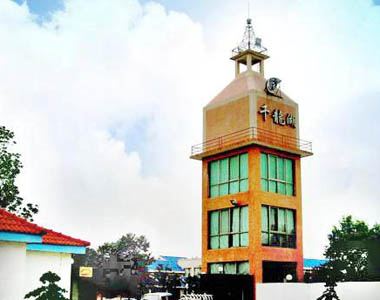
Thousand-Dragon Ecosystem Vacation VillageThousand-Dragon Ecosystem Vacation Village is located at Getang Town, Wangcheng County, and it is 30 kilometers from Changsha City. The vacation village was built in 2002, and opened officially on July 1, 2004. It covered an area of 3,066 mu. There are 8 facilities which cost 180 million RMB: hotel, conference center, fishing pond, water sports center, leisure zone, fish feeding, vegetable land and young trees center. Hotels hold villas, luxurious and standard rooms, and altogether there are over 3,000 beds, and the hotel can hold the largest capacity of 800 people to have dinner.The vacation village has won prizes such as “national scenery zone”, “agriculture tourism experiment”, “international dragon-boating race standard zone”, “five-star eco farm”, “new 8 Xiaoxiang scenery spots”. In 2005, 2006 and 2007, China Wangcheng Thousand-Dragon Lake International Dragon-boating inviting contest, first and second Changsha Countryside Travel Festival, National Fishing Champion of 2007 held at this vacation village one after another. \"Thousand dragons are dancing with morning clouds, and the lake and the sky share the same color\". Thousand-Dragon Lake is a complex for business meeting, vacation and sightseeing. When you are at Bamboo Garden and view, you will find the lake is like a mirror. Dragon Poem House once held the evening party \"Taiwan, our family member\". Water restaurants hand down the cuisine culture of Xiang dishes. While when you play tennis, ping-pong and ride water bike and motor, you will feel young and energetic.The vacation village is becoming the countryside tourism engine within 3 years under the leadership and management of Mr. Chen Xinghua. This is Shangri-la for people.
Changsha & Zhuzhou & Xiangtan
2010-10-04 20:52
View:6163
-
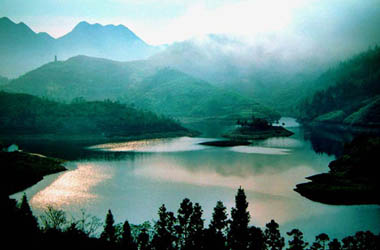
Changsha Huitang Hot Spring,Huitang WenquanThe Huitang Hot Spring is located at the southwest of Ningxiang County, Hunan Province. It is one of our country\'s three big famous high temperatures compound hot springs. Huitang, in English it means \"grey soup\", is nominated from the vapour rising out the spring. Huitang Hotspring in Ningxiang County has a history of 2000 years. The water is transparent and clear and the spring water temperature reaches as high as 89.5 degree centigrade and has 29 types of minerals that are beneficial to the human body. It has always been regarded as \"natural medical hotspring\".The hot spring area is 8 square kilometers and is rich with water volume resources. At present, the area has been developed on initial stage. The daily water supply is 3,500 tons, with almost 10,000 tons of hot spring water pending for development. The Huitang hot spring has advantageous resources and has broad development prospect. The Huitang scenery is beautiful and with good vegetation. There is the Dongwu Mountain near the hot spring; the mountain valley is profound and the spring water is rill. It is a rare place with its pleasant natural scenery and joyous countryside scenery. In the ponds near the hotspring, there herds fishes and ducks, which are quite delicious. They are called \"Tang Fish\" and \"Tang Duck\" and were tributes to the emperor in Ming and Qing Dynasties.Traffic GuideName:Changsha Huitang Hot Spring (Huitang Wenquan)City:ChangshaAddress:Ningxiang CountyAdmission:FreeTel: 086-0731-87299229 How to get there: In the West Bus Station of Changsha City, there are regular bus to Huitang Village,and the morning shift starts at 6:20 AM. One can take bus from Changsha City to Ningxiang County and then take another bus to Huitang Village.In Ningxiang County every 20 minutes from 6:20 AM there a bus to Huitang.The buses to Lianyuan and Shaoshan also pass Huitang.
Changsha & Zhuzhou & Xiangtan
2010-10-03 21:00
View:7273
-
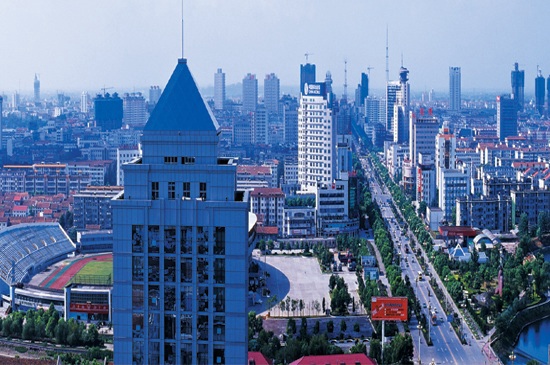
Located in the northwest of Hunan Province, the city of Changde is adjacent to the vast Dongting Lake on the east, lies within easy access to Yiyang City to the south, is connected to the Wuling and Xuefeng Mountains to the west, and borders Jinsha and Yichang to the north. Due to its advantageous geographical location, the city was historically called “the throat of Guizhou and Sichuan and the gateway of Yunnan and Guizhou”. Previously it was called Changde Prefecture, and it was renamed Changde City by the State Council in June 1986. The jurisdiction of Changde covers Wuling District, Dingcheng District and six other counties including Hanshou, Taoyuan, Linli, Lixian, Shimen, Jinshi and Anxiang. Jinshi city is governed by Changde on behalf of the Hunan provincial government. Changde has an area of 18,200 km2 (116 km2 urban) and a total population of 5.87 million (500,000 urban). The city is both historically important and contemporarily famous. As an ancient city, Changde boasts a unique feature. According to scientific research, there were human beings inhabiting here some 8,000 years ago. It lay in the area of Jinzhou, one of the nine regions at the time of the Xia, Shang and Zhou Dynasties. It was the central area of Chu and Qian in the Warring States Period, while in the Qin Dynasty it belonged to the central county of Qian. It was called Wuling County in the Han Dynasty and named Langzhou in the Sui Dynasty, and Dingcheng in the Song Dynasty. In the 7th year of the Song Dynasty under Emperor Huizong (1117 AD), Changde County was established, and in 1165 AD (the first year of Song Emperor Xiaozong), it was upgraded to be Changde Prefecture. The name of Changde has been used ever since. Changde has produced many important figures in Chinese history. Many fine works of literature praising the beauty of Changde’s landscapes have been written here by many historical masters like Qu Yuan, Tao Yuanming and Liu Yuxi. In contemporary times, a group of important people and revolutionaries emerged from here, including Lin Xiumei, Jiang Yiwu, Song Jiaoren, Lin Boqu etc., and literary celebrities such as Ding Ling, and Jian Bozan (former president of Beijing University). History has given Changde both unique natural scenery as well as historical sites. At present, more than 500 relic sites from the Paleolithic and Neolithic Eras have been discovered. Among the 276 specially protected relic sites already discovered, 15 are of national value and 14 of provincial value. Located in this beautiful land are three national forest parks, three provincial forest parks, one nature reserve, and one provincial tourism area. Taohuayuan Resort, a well-known historical resort enjoying fame at home and abroad, has become a modern place of sightseeing where people enjoy the beauty of nature in a unique setting. It is worth mentioning that Changde Poem-engraved Wall, designed on the basis of displaying many famous poems and articles by ancient and modern celebrities and created with the expert help of a group of famous Chinese calligraphers, painters and carvers, adds a new cultural view to modern Changde.With great potential in natural resources and considerable strength in its modern economy, Changde City enjoys pleasant weather and multiple landforms. The Yuan River and the Li River, admitting different sources of water, run through the districts and counties in Changde. The city is home to some 2,472 types of animals and plants, including 24 types of rare animals. Among nearly 100 kinds of minerals, the reserve amount, quality and yield of realgar rank number one in China. The yield of salt, gold, gypsum, bone coal, quartz sand and bentonite are on the top in Hunan. In addition, reserves of silicon sand, gypsum, marble, granite, barite, diamond, talc, ground phosphate rock, soft coal and bone coal are abundant in Changde. Since the liberation in 1949, and especially since the implementation of reform and free-market policies, the people of Changde have grasped the opportunity to open and develop the region. Coupled with a strong agricultural base, Changde’s economy has been increasingly strengthened. As one of China’s main areas of grain and cotton produce and the biggest producer of grain and cotton in Hunan, Changde has built an export-oriented agricultural economy. At the same time, it has formed an industry with unique characteristics: major local industries include tobacco, food, textiles, electronics, chemicals, construction materials, bamboo and special cement. Over 400 products, including Gold Lotus series cigarettes, Wuling Wine, Deshan Liquor and Special Cement, have won the title of “High Quality Commodity” awarded by the State, Ministries and the Province. They are marketed nationwide and some of them have even penetrated the international market. The city also organises local business fairs that are adequately distributed between urban and rural areas. Numerous modern hotels, guesthouses, department stores and recreational centres have been built to provide excellent services. The annual business volume at the Qiaonan Market alone has reached more than 11.5 billion Yuan. Changde’s high-tech industries are also promising. In recent years, Changde’s infrastructure has been improved daily, and development prospects are becoming more attractive to investors. A local 3-dimensional transportation system has taken shape incorporating aviation, rail, road and waterways. The 4C level airport where Boeing 737 and 757, Douglas 80 and 82 planes can land and take off has opened seven flight routes to Beijing, Shanghai and Guangzhou, etc. Two major railways, the Zhicheng-Linzhou Railway and the Shimen-Changsha Railway, pass through Changde City connecting to the Jiaozuo-Zhicheng Railway and the Beijing-Guangzhou Railway. By building the Yuan River Bridge, Li River Jinshi Bridge, Li River Shimen Bridge and Anxiang Dajingang Bridge, the Yuan and Li Rivers have become traversable waterways. The widened and reconstructed National Highways G207 and G319 connect all major regions and lead to 8 other provincial routes. By the end of 1998, an expressway from Changde to Changsha had been open to traffic. The total length of accessible land roads and waterways in Changde is estimated to be more than 6,200 km and 2,400 km respectively, and the 36 docks along the Yuan and Li Rivers have a total capacity of 10 million tons per year. Both passenger and freight ships can now sail directly to the Dongting Lake and the Yangtze River from Changede. Local power stations can generate 1.4 million kw of electric power to meet demands in the urban and rural areas. The Shimen Thermal Power Station, with the largest generating capacity in Hunan, is now in operation. Being the first of its kind in Hunan, the station’s first stage has been completed and is now in operation. Changde has installed a total number of 135,000 advanced digital telephones that link towns and factories, and connect Changde to 180 foreign countries. Mobile telephone services are available in Changde’s nine districts and counties. Combined with its constant urban expansion and improved management, the city enjoys tidy and clean streets (about 100 km in length), and has ample water and electricity supplies. It also provides complete services in banking, consultation, auditing, notarization, law, commodity inspection and customs. Changde is an inland city, but its geographical location makes it a great gateway to the interior. Its development has now been greatly contributed by the famous Three Gorges Project in the neighboring Hubei Province. Changde has become a frontier city connecting the Three Gorges to Hunan Province, which will in turn help in opening up and developing Hunan Province.Changde is embracing new opportunities with further reform and development in line with the construction of a harmonious society. We warmly welcome friends at home and abroad to visit Changde, invest in our local economy, and work together to develop a bright future.
Changde & Yueyang & Hengyang
2010-03-19 18:48
View:14436
-
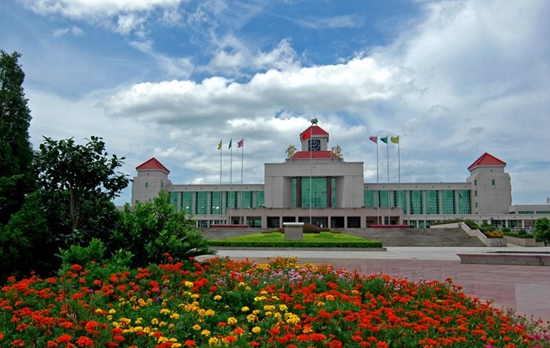
Changde Railway Station is located at the end of Wuling Road. Passengers from here can reach many big cities such as Beijing, Shanghai, Luoyang, Guangzhou, etc.
Changde & Yueyang & Hengyang
2010-03-16 19:26
View:3953
-
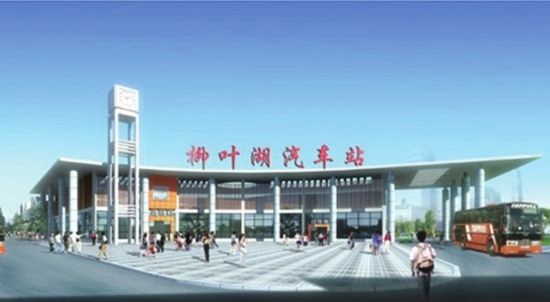
The construction of Liuye Lake Bus Station began in 2008, and it went into service in September 2009. Adjacent to the Liuye Lake and National Highway 207, it is a first-class bus station covering an area of about 50 mu with a total investment of 40 million Yuan. There are supermarket, a passenger lounge, a smoking room, drinking fountains, WC and a large TV screen for passengers to enjoy. Additionally, to offer more convenience to passengers, there is also a place for you to keep your small articles, as well as easy-access facilities for the disabled. The Bus Station, comprising 28 routes, enables you to get to 2 provinces, 3 cities and 10 counties. Each day, 531 buses meet the average transportation capacity of 10,000 people.
Changde & Yueyang & Hengyang
2010-03-15 19:35
View:4280
-
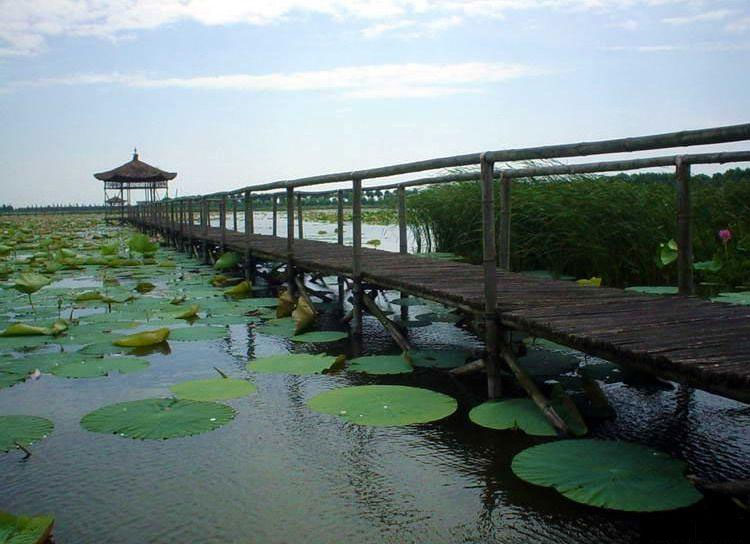
Xidongting Wetland is located in the eastern part of Hanshou County, Hunan Province. It covers an area of 35,680 hectares and it is the entrance to the Dongting Lake, China’s second largest freshwater lake. It is the bridgehead of the golden tourist route of Changsha-Zhangjiajie, only a hundred kilometers east of Changsha, 40 km west of Changde, and about two-hours drive from Zhangjiajie. In 1998, as approved by the Hunan Provincial Government, it was established as a provincial nature reserve. In 2002, it was included by UNESCO on the “List of 30 Wetlands of International Importance”. In 2005, it was designated by the National Ministry of Construction as one of 9 National City Wetland Parks. In 2008, it was granted the title of National AAA Scenic Spot by the National Tourism Bureau. Xidongting Wetland is like a natural maze. There are abundant waterways and various islands with endless reeds together with a rich production of fish and rice. It is also known as a biological gene bank because it is the habitat for 416 different wet plants, 217 species of birds, and 118 species of fish. It also boasts a profound cultural influence as it is the birthplace of the Canglang Culture. Qu Yuan, the ancestor of Chinese Yongwu Poetry, once lived here and created many verses to honour the Dongting Lake, as did other men of letters, providing many local legends and a rich local mythology. Within the wetland there are more than 30 eco-tourism attractions and 4 cultural spots. It is becoming ever more popular among tourist agencies and travelers alike. The Changsha-Zhangjiajie Expressway passes through this area with two exits at Junshanpu and Taizimiao. There is a county level railway station at Taizimiao on the Shimen-Changsha Railway. The No.319 National Highway and S205 Provincial Highway run through this area eastward and southward respectively. It is also within easy reach of the Huanghua International Airport (1 hour away) and the Taohuayuan Airport (40 minutes away). It provides waterway transportation which can reach many other places via the Dongting Lake.
Changde & Yueyang & Hengyang
2010-03-13 19:50
View:5559